Visual Mud Tracks V1.3.6.2
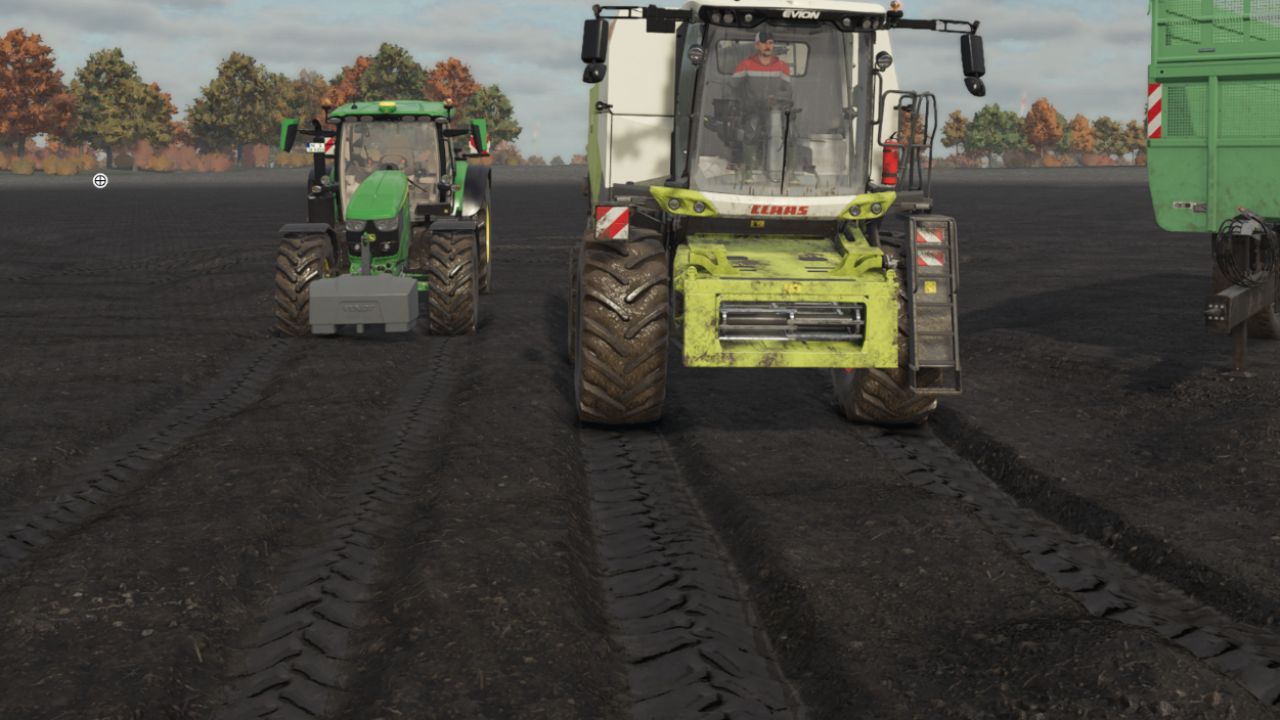
Visual Mud Tracks V1.3.6.2
Visual Mud Tracks – full mod description
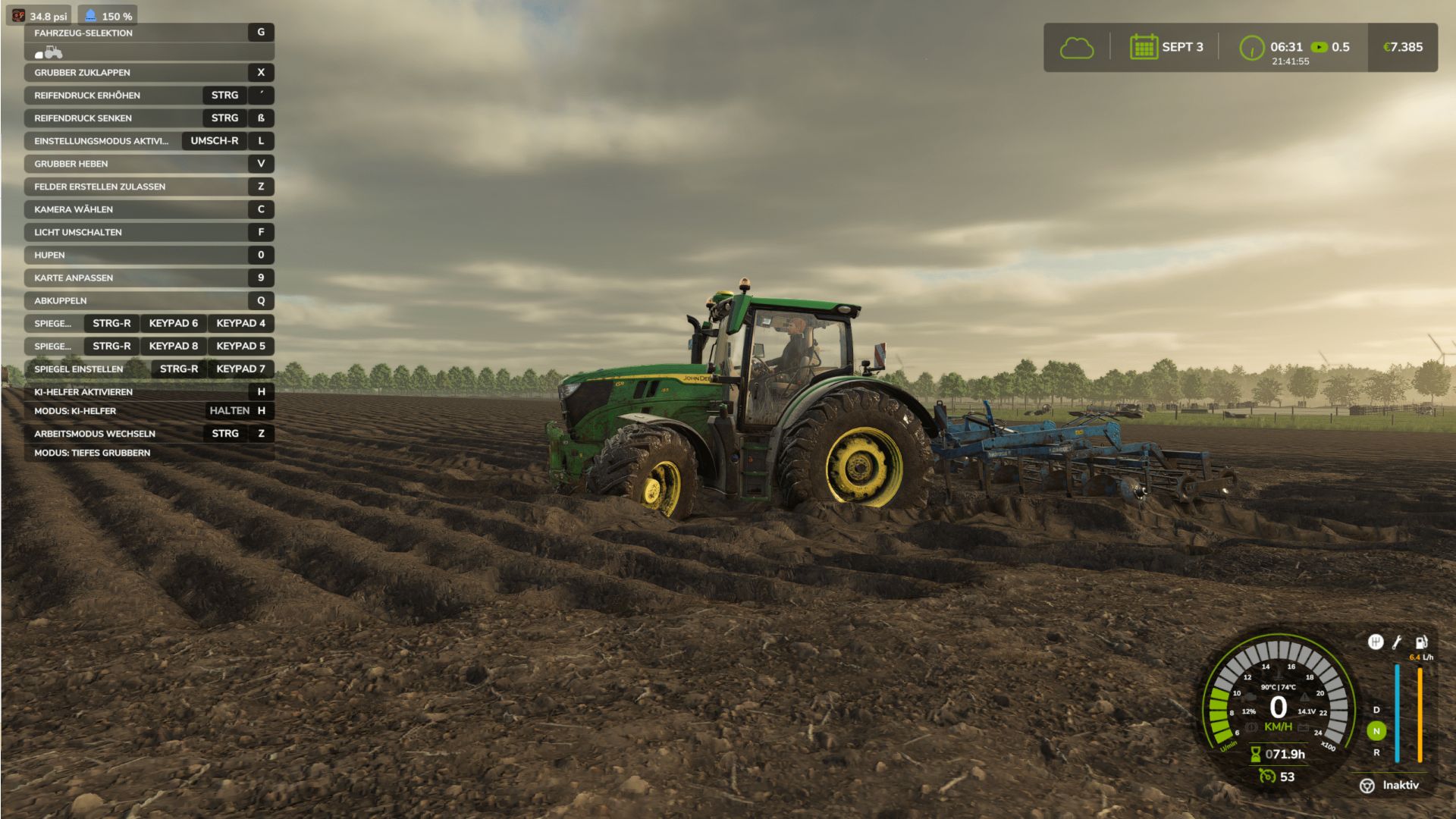
Visual Mud Tracks expands Farming Simulator 25 with a comprehensive simulation of lanes, soil moisture, tire behavior, compaction, fruit destruction, root damage and bogging. This means that vehicles react much more realistically to dry, moist and water-saturated soils.
The mod is designed for single player and multiplayer and can work with the **Realistic Water & Soil Management System**. Soil moisture, load capacity and waterlogging not only influence the display, but also tire contamination, sinking, slippage, driving resistance and plant damage.
#Physical lanes and terrain grooves
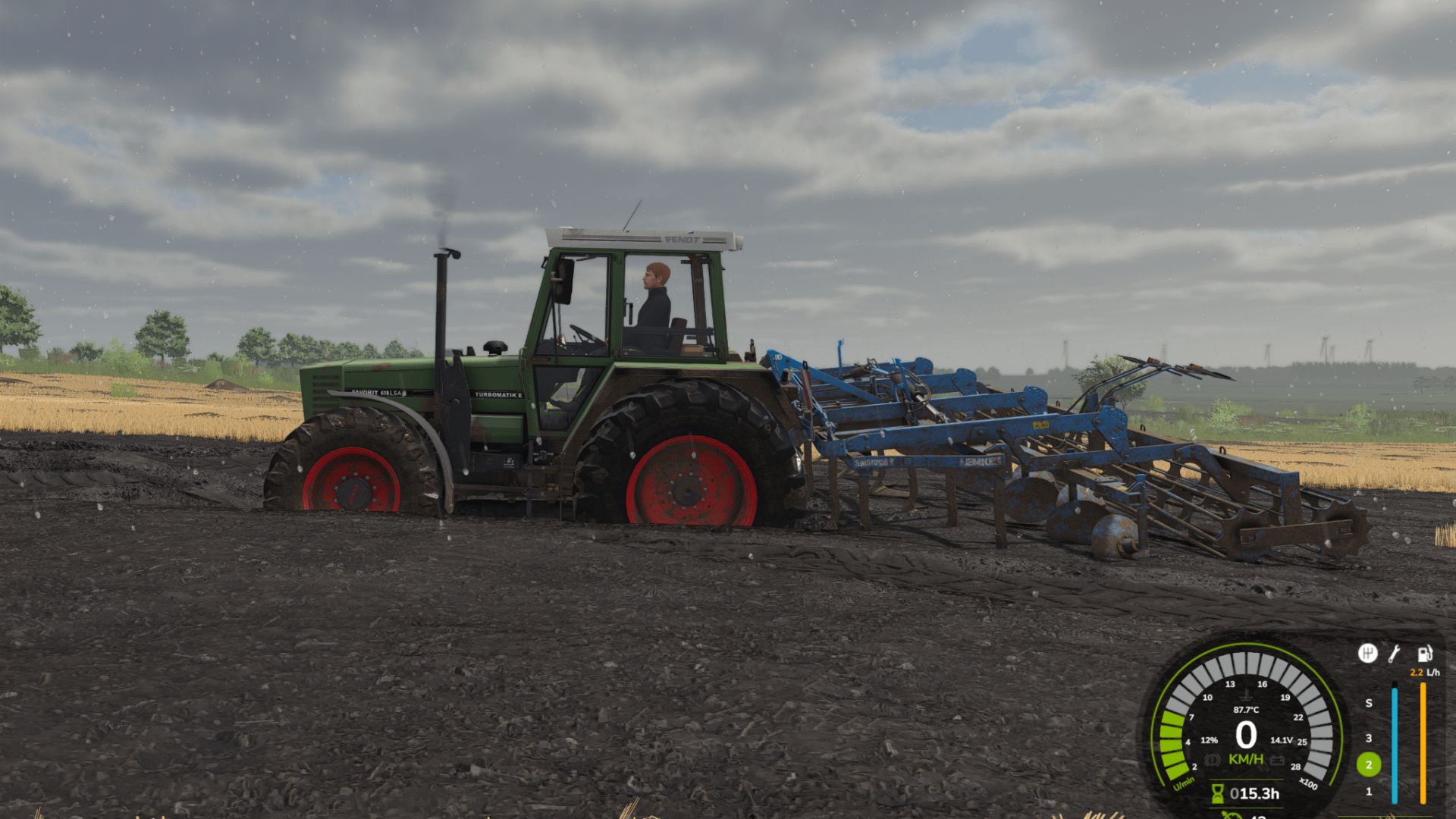
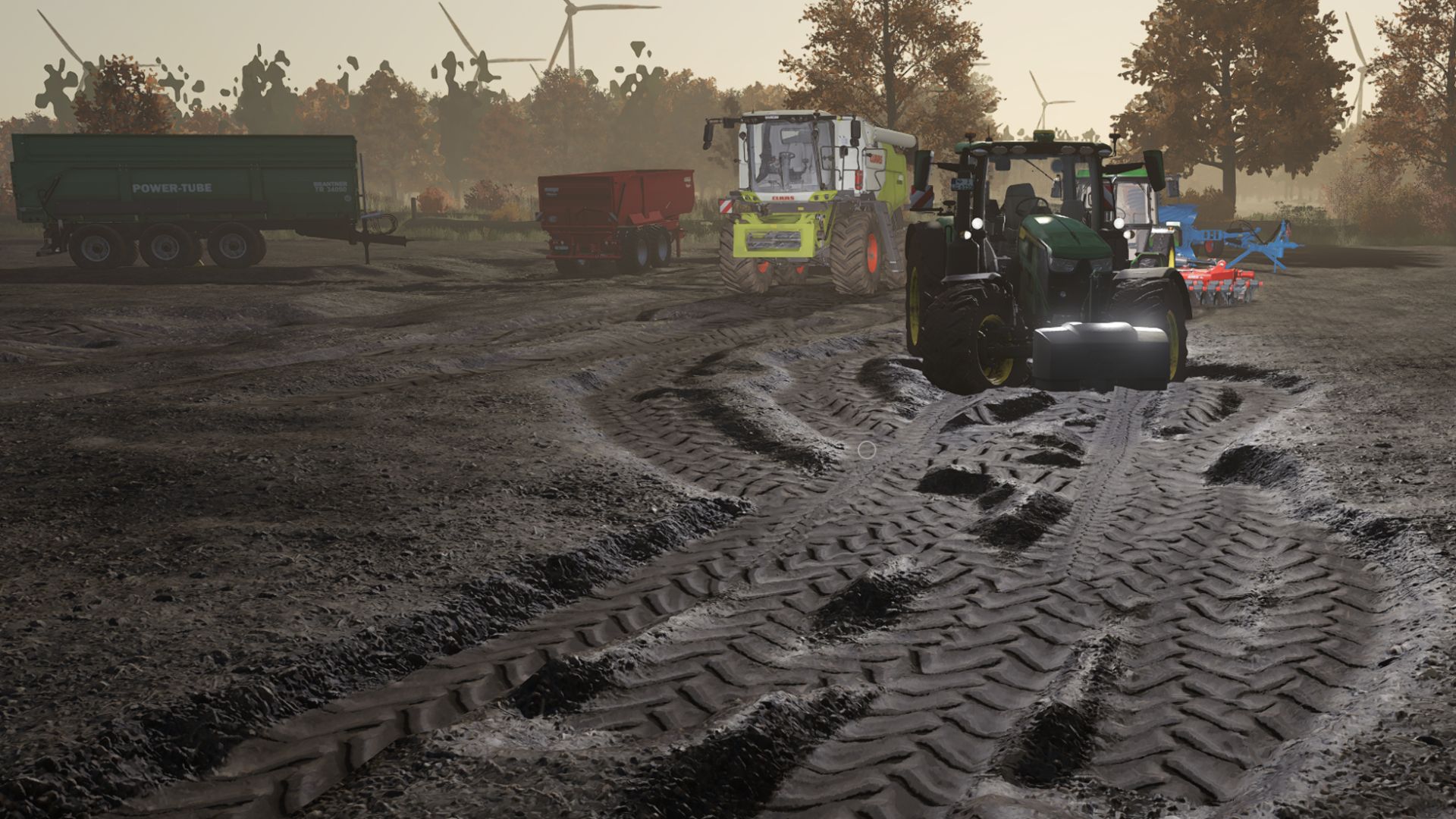
Tires can permanently lower the terrain and create real grooves in the terrain heightmap. The depth and width of the tracks are calculated individually for each wheel.
To be taken into account:
Vehicle weight
actual wheel load
Tire width and tire radius
Tire pressure
Soil moisture
Soil saturation
Carrying capacity
Speed
Wheel slip
Cornering
Number of previous crossings
Trailers, levels and attachments
Left and right bike lanes remain separate. The center of the vehicle is not lowered unnecessarily. The grooves have a narrow, steep cross-section so that the edge areas do not sink over a large area.
Existing tracks can be deepened by further difficult crossings. A maximum depth protects the terrain from extreme deformation.
The groove is created directly at the actual wheel contact. There is no delayed post-processing behind the vehicle. Steered, mirror-mounted, and differently aligned wheels are taken into account.
Restoration through tillage
Physical lanes can be removed again through appropriate tillage.
The following are supported, among others:
Plows
Cultivator
Disc harrows
Subsoiler
Mulcher
Reels
Seeders
Direct seeding machines
Planters
The terrain is only reset within the actual work area being worked on. Pending trace calculations and saved visual traces are also removed there.
Safe Terrain Journal
The mod uses separate savegame files:
`visualMudTracksTerrainBackup.xml`
`visualMudTracksActiveRuts.xml`
`visualMudTracksState.xml`
The original terrain height of a cell is saved during the first intervention and is not later overwritten by further passes. Active grooves and recovery information are managed separately.
This allows tracks to be reset in a more controlled manner. Interrupted restores can be resumed the next time you start the game.
Important note for updates: Before switching from an older version, existing lanes with the old version still installed should be removed using tillage equipment and the score saved. Grooves that have already been permanently written into the terrain height map may otherwise remain.
Visible and physical sinking
Tires visibly and physically sink on soft and wet surfaces. The sinking is implemented via the effective wheel physics radius. This means that the tires, suspension and ground contact react together.
The sinking occurs progressively and not suddenly. On solid ground, the wheel lifts itself out of the ground in a controlled manner.
The sinking depth depends on:
Soil moisture
Saturation
Carrying capacity
Wheel load
Tire width
Tire pressure
Speed
Slip
Existing track depth
Wide tires distribute the load better. Narrow, heavily loaded tires cut deeper.
Tire pressure system
The tire pressure can be changed while driving. The value is saved for each wheel and synchronized in multiplayer.
Low tire pressure:
increases the contact area
Improves grip on soft ground
reduces cutting
can make it easier to get out of soft tracks
High tire pressure:
reduces the contact area
increases cutting
increases the risk of getting stuck on wet ground
may be cheaper on solid ground
A compact HUD shows the current pressure in bar and evaluates it in color.
## Soil moisture HUD and RWSM connection
The Soil Moisture HUD shows the current RWSM topsoil value in percent. The display uses the same soil moisture value as the RWSM field info.
Values above 100 percent can represent severe waterlogging or waterlogging.
RWSM soil moisture affects:
Sludge content
Tire contamination
Particle effects
Carrying capacity
Sinking depth
Tire grip
Wheel slip
Groove depth
Danger of getting stuck
Fruit and root damage
Increased soil moisture caused by irrigation can also change the soil physics.
Tire dirt and mud The amount of mud is stored individually for each tire. A tire remains dirty after leaving the field and cleans itself depending on the surface.
Asphalt cleans quickly
Gravel cleans slower
Clean dirt roads only slightly
High speed throws more mud out of the tread
Rain also washes off the tires
a light film of dirt may remain
The particle effects distinguish between dry earth and wet mud.
Included are:
fine dry soil particles
medium dry soil particles
fine wet splashes
medium mud particles
Rare heavy mud lumps
The amount of particles depends on wheel rotation, slip, tire width, radius, moisture, sink factor and load capacity. Particles are only generated when there is suitable ground contact.
Progressive stuck physics
On heavily waterlogged and less stable ground, a vehicle can progressively become stuck.
Continuous slippage causes driven wheels to dig in further. At the same time, the transferable grip decreases and the driving resistance increases.
To be taken into account:
Soil moisture and saturation
Carrying capacity
Wheel load
Tire pressure
Slip
Speed
Engine utilization
Engine speed
Tensile load
Working resistance
Duration of exposure
Plows, cultivators, disc harrows, subsoilers, seed drills, power harrows and rollers produce different pulling resistances. Working width and working depth influence the power requirement.
In extreme conditions, propulsion can be almost completely lost.
Lifting or uncoupling an implement immediately reduces the additional load. Controlled reversing can reduce the digging condition and free the vehicle along its own lane.
Soil compaction
Vehicles compact the top and bottom soil depending on wheel load, soil moisture, slip and number of passes.
Included are:
Topsoil compaction
Subsoil compaction
Stronger compaction in wet soil
Multiple experiences
Additional load due to cornering and slipping
Plow sole for frequent plowing
Different effects of plow, cultivator and subsoiler
Targeted reconsolidation by rolling
Slow biological recovery
Compaction and soil structure can be viewed in the field info.
Fruit destruction
Plants in the immediate tire area may be damaged or completely removed. The native LS25 fruit destruction is used for this.
The damage depends on:
Wheel load
Tire width
Soil moisture
Slip
Cornering
Growth stage
Root health
Soil structure
Number of crossings
Young plants react more sensitively. Repeated crossings significantly increase the damage.
Normal tires remove plants after several trips over the same spot at the latest. Detected maintenance tires reduce the damage, but do not prevent it completely if the vehicle is driven frequently.
Root Health
Each contaminated soil cell can receive its own root health value.
Root damage occurs due to:
high wheel load
wet ground
strong slip
Cornering
Multiple crossings
unfavorable growth stages
compacted soil
If root health declines, the risk of visible plant damage increases.
Below 70 percent: increased sensitivity
Below 40 percent: further crossings lead to destruction more quickly
Less than 20 percent: very high risk of failure
Root health is saved and can slowly recover biologically.
Field info and settings menu
The mod expands the field information to include numerous land values, including:
Soil compaction
Underbody status
Root health
Soil structure
Sink factor
Carrying capacity
Fruit and root damage
The settings menu contains detailed descriptions of all options. High and low values, interactions, performance consequences and save game effects are explained.
The menu texts are available in twelve languages:
German, English, French, Spanish, Italian, Dutch, Polish, Portuguese, Russian, Czech, Hungarian and Turkish.
Multiplayer and performance
The crucial physics calculations run on the server side. Tire pressure, contamination and important soil conditions are synchronized.
To optimize performance, the mod uses:
limited groove points
adjustable storage intervals
Event and bulk caches
sleeping floor cells
Reduced refresh rates for removed or inactive areas
delayed safe initialization of the particle systems
Clean release of particle effects when deleting vehicles
V1.3.6.2
Complete connection to the Water-Soil API of **Realistic Water & Soil Management** added.
Soil moisture, pore saturation, surface wetness, bearing capacity, soil type and possible sinking depth are taken directly from RWSM.
Damp floors remain soft and at risk of traffic even after the basic game has visually dried.
Mud, tire, track and compaction data is permanently saved and synchronized in multiplayer.
Unified author name in all mod files to Sherman.
Tire pressure and ground load
Adjustable tire pressure system with bar and PSI display added.
Recommended field pressure is calculated from tire width, tire size, wheel load, vehicle weight and payload.
Tire pressure that is too high reduces the contact area and increases the ground pressure.
Appropriately low field pressure reduces topsoil compaction and subsidence.
High wheel and axle loads can cause deep compaction despite low tire pressure.
Tire pressure HUD added with color evaluation of the optimal pressure range.
Actual tire pressure and calculated ground pressure are passed to RWSM.
High tire pressure increases topsoil compaction and shear damage.
Root space and subsoil compaction remain more dependent on wheel and axle loads.
Sinking and vehicle physics
Sinking is calculated from soil moisture, load capacity, wheel load, tire width, tire pressure and slip.
Added different values ​​for tractors, trailers and tracked vehicles.
Loaded vehicles and full trailers sink more than empty vehicles.
Heavy trailer wheels can create deep tracks even without traction.
Slip digging also works when driving slowly and no longer only when completely stationary.
Different FS25 slip values ​​are recognized and unified.
Percentage slip information is correctly normalized.
If the slip continues, the vehicle will progressively sink additionally.
Visual wheel sink depth and physical terrain groove have been linked together.
Safety limits prevent unstable 50cm drops.
Maximum track depths have been limited separately for tractors, heavy trailers and caterpillars.
At 0°C or below, the ground is considered frozen.
No new sinking, slipping or compaction effects occur on frozen ground.
Existing traces remain intact in the event of frost.
Physical lanes
Added direct heightmap deformation for real terrain tracks.
Terrain grooves are saved permanently and restored after loading.
Maintained savegame compatibility with older versions from 0.35.5.
Removed incorrect automatic cleanups and aggressive groove migrations.
Old tracks are no longer deleted when a terrain check fails.
Terrain writing logic returned to the stable flow of the previous version 0.36.6.
Repeated instant checks and permanent post-corrections removed.
Terrain cells are only rewritten if the target depth changes significantly.
Small changes in the millimeter range are ignored.
Terrain brush is aligned to a fixed heightmap grid.
Brush position remains stable when stationary.
Slip only changes the depth of the existing track and does not constantly change brush position or width.
Terrain stamp has been reset to the actual tire contact patch.
Terrain no longer drops significantly in front of the tire.
Forward and reverse travel are taken into account in the contact position.
Tire width is used directly for track width.
Narrow tires only write the required heightmap cells.
Adjacent terrain columns are no longer lowered due to rounding errors.
Wide tires and tracks receive a limited, suitable contact area.
Lateral sinking of the terrain far next to the tire has been greatly reduced.
Very wet ground creates steeper track edges.
The previous bowl-shaped Smooth effect has been removed.
The track sole remains more evenly deep within the tire width.
Transitions to the unchanged terrain have been significantly reduced in size.
The visible edge sharpness remains dependent on the heightmap resolution of the map.
Multiple crossings and slippage
Multiple passes are saved per lane or terrain cell.
The first crossing causes the most damage.
Further passes increase compaction and depth with decreasing additional effect.
Repeated trips through the same lane are detected.
Axles of the same vehicle are not automatically counted as completely separate passes.
Loaded trailers can create deeper tracks than the towing vehicle after several passes.
Multiple passes are retained after saving and loading.* Slip deepening and pure load compression are treated separately.
Sustained slipping gradually digs the wheel deeper.
Terrain is only rewritten with additional slip depth after a relevant change.
Anti-jitter improvements
Reduced repeated changes to the physical wheel radius every frame.
Wheel position and friction are only updated on real changes.
Minimum interval between WheelPhysics updates added.
Small fluctuations in the sinking depth are smoothed out.
Minimal humidity or load changes do not trigger constant physics recalculations.
Vehicle suspension and artificial wheel lowering no longer work against each other permanently.
Repeated repair writes to the same terrain location.
Lateral tremor due to offset brush marks significantly reduced.
Tire moisture and mud
Tire moisture was separated from nFK and plant available water.
100% nFK does not automatically result in wet tires if the surface is dry.
Surface moisture, wetness memory, soil type and slip determine tire status.
Tires slowly become wet on wet ground and become increasingly muddy as they slip.
Tires remain visibly dirty after leaving a muddy field.
Immediate full cleaning on dry ground or road was prevented.
A residual film of mud remains.
Dry grass can remove some loose mud.
Wet grass will not clean tires.
Clean asphalt, concrete and gravel slowly depending on the route and speed.
Rain and wet roads can wash off extra mud.
Amount of mud is stored per tire.
Vehicles dry off again on solid surfaces and in halls.
Vehicles do not remain permanently wet in dry halls.
Pure wetness dries faster than mud.
Wet and dry transitions have been significantly smoothed.
Small fluctuations in humidity are ignored by a tolerance zone.
Shaders no longer immediately switch between fully wet and dry.
No textures, shaders or files were adopted from the LS19 mod “realDirtColorâ€.
Only the principle of slow transitions has been reimplemented for FS25.
Wetness and shader display
Previous artificial black wet areas and visible floor patches removed.
No more extra dark circles or decal borders.
No permanent terrain texture or density map changes.
Native FS25 wet and vehicle materials are used.
RWSM remains the local source of moisture and mud intensity.
Global wetness values ​​are not permanently overwritten.
Vehicles in halls do not become artificially wet due to global soil wetness.
Shader and display range has been significantly increased.
Soil and wet conditions are prepared earlier at a greater distance.
Visible build-up of the shader directly in front of the vehicle has been reduced.
LOD and visibility ranges can be adjusted over larger areas.
Mud particles
Particles respond to moisture, soil type, speed and slip.
Mud particles are increasingly formed when there is real wheel slip.
Particle emitter has been moved closer to wheel-to-ground contact.
Vertical speed has been reduced.
Wet clumps of mud stay closer to the ground.
Lifespan of high-flying particles has been shortened.
Particles no longer fly unrealistically far over the vehicle.
RWSM, compaction and yield
Vehicle mass, payload, level, wheel load, axle load, tire width, tire pressure, ground pressure and slip are transmitted to RWSM.
Wet soil increases the risk of compaction.
Appropriate field pressure reduces damage but does not completely compensate for extreme loads.
Slip creates additional topsoil and shear damage.
RWSM can use compaction and track depth for roots, plant development and yield.
API fallbacks for operation without full RWSM availability remain included.
Performance and compatibility
Separate update intervals introduced for terrain, wheels, shaders and particles.
Distance-controlled LOD and calculation intervals reduce system load.
No full terrain or vehicle searches in every frame.
Savegame data is saved compactly.
Old savegames will continue to be used without any destructive cleanup.
Multiplayer remains server authoritative.
No write access to plant growth states or fruit density maps.
Improved compatibility with RWSM, Precision Farming and standard FS25 vehicles.
Required mods:
Realistic Water & Soil Management (RWSM)
Author: Sherman200